
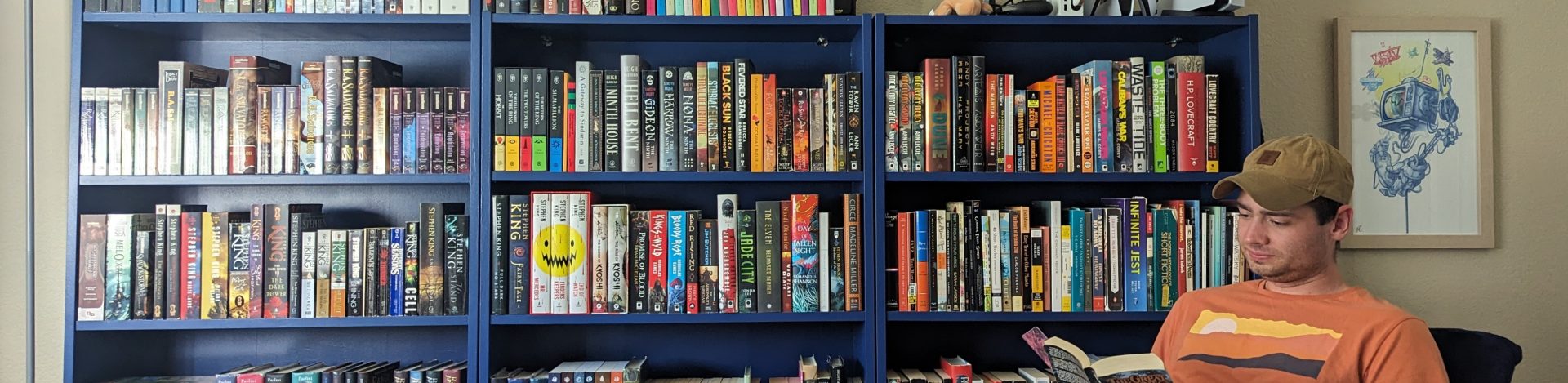
Back when I was taking creative writing classes in college, I remember a professor steeped in the world of literary fiction asking me why I needed such outlandish settings and convoluted plot in both the stories I wrote and the ones I most preferred to read. My first thought was how everything is relative. The plots I cobbled together contained twists sure, but far less than the masterful outlines of the Brandon Sandersons and Brent Weeks of the world. I thought, hoped anyway, that my writing blended the organic character building strengths of discovery writing with the cohesive, layered payoffs of outlines. What’s more, to call science fiction and fantasy settings outlandish was, in my mind, ignoring their greatest strength: their ability to explore our reality through a new and fascinating lens.
I could tell my professor meant her question in the collective sense; she was attempting to understand why some people held such an attraction to genre fiction as opposed to literary, why they felt a need for brawls, shootouts, mysterious deaths, the supernatural, the unknown horror lingering just outside the light, the mad ramblings of a prophet, or the monologues of a rogue AI. I’ll admit genre fiction can be a bit (ok, more than a bit) self-indulgent at times, but I would also argue so can any other category. I’ve read literary fiction so obsessed with appearing clever it lost any meaning it might have had. I’ve also read literary fiction that had me thinking in new and wonderful ways (this is more often the case when I happen to pick up literary fiction). Labels are created to group things with a common set of characteristics. It should come as no surprise sometimes those same characteristics will get overplayed no matter the classification.
To try and pull this all together, we use categorical labels to organize art, to create a shorthand for our brains so we can more easily find stories that fit our subjective tastes. The problem comes, I think, when we confuse subjective taste for inherent value. Stories can be such a beautiful thing, an unvarnished attempt to share and grow and empathize. Why malign one style just because it likes to throw in some magic or future tech while it explores humanity?
M. Weald
P.S.
On a different note, I’ve been trying to diversify my readership and am currently working my way through Who Fears Death by Nnedi Okorafor. Maybe I’ll write more about it later on, but so far it is pretty incredible, sobering and moving and beautifully written. Glad to hear it might be picked up by HBO. Anybody know if that’s still a thing?
P.P.S
I wrote this after marathoning episodes of The Expanse with some Farscape and a smidge of Defiance thrown in. I’ll need to write about Farscape sometime. That show is absolutely bonkers in the best of ways.
 M. Weald
2 thoughts on “In Defense of Genre (And Everything Else)”